

Slab Leak vs. Pipe Leak in Brandon, FL: How Leak Detection Pros Confirm the Source Fast
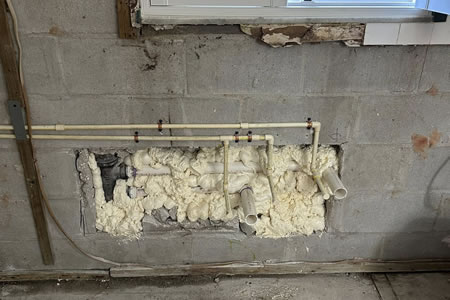
When water shows up where it should not, the first step is pinpointing the source. That is where professional leak detection in Brandon, FL separates guesswork from facts. The faster we confirm whether it is a slab leak under your floor or a pipe leak in a wall or attic, the faster your home, floors, and drywall are protected.
Below, you will see how licensed plumbers verify the exact source using proven methods like acoustic leak detection, thermal imaging, moisture mapping, and isolation testing. If you want a team that does this work every day, explore our professional leak detection service and learn how we zero in on hidden water fast.
Why Leaks Happen Under Brandon Slabs
Many Brandon-area homes sit on slab foundations. Over time, normal settling, small shifts in our sandy soils, and temperature changes can stress water lines that run under the slab. Corrosion or small abrasions at bends can open tiny pinholes that release water. In neighborhoods from Valrico to Riverview and Bloomingdale, even a slow underground leak can travel along the slab and show up far from the actual break.
Inside the home, above-slab pipe leaks can come from supply lines in walls, ceilings, or crawl spaces. These leaks may drip, spray, or wick through building materials. The symptoms can look similar to a slab leak at first glance, which is why clear testing matters.
Slab Leak Symptoms vs. Pipe Leak Symptoms
You do not need to diagnose it on your own. Still, recognizing common signs helps you act quickly and call a pro.
- Warm spots on tile or concrete floors often point to a hot-water slab leak beneath the surface.
- Unexpected water at baseboards or the bottom of walls can be either slab or wall-pipe related.
- Running water sounds with fixtures off may indicate pressure loss somewhere in the system.
- Musty odors, damp carpet, or buckling laminate can result from prolonged moisture exposure.
Do not ignore sudden spikes in your water bill. Unexplained usage is a classic early clue that tells you to call a licensed plumber right away.
How Plumbers Confirm the Source Fast
Plumbers combine multiple tools so the evidence agrees. That way, we fix the real problem the first time and avoid opening the wrong area.
Step 1: System Interview and Meter Check
We start with a short conversation about recent changes, then verify if water is moving when every fixture is off. A steady meter movement suggests an active pressurized leak. This establishes whether testing should focus on supply lines versus drains or appliances.
Step 2: Acoustic Leak Detection
Using highly sensitive listening equipment, we “hear” turbulence created by pressurized water escaping a pipe. On a slab, we listen across the floor to map the loudest zone. On an above-grade pipe, we listen along walls or ceilings. Acoustic patterns help narrow the search before we open anything.
Step 3: Thermal Imaging and Moisture Mapping
Hot-water slab leaks often warm the slab and nearby flooring. A thermal camera highlights temperature differences, while moisture meters trace how far water has traveled. Together, they help confirm whether the source is under the floor or inside a wall.
Step 4: Isolation Testing
To separate a slab leak from an in-wall pipe leak, we isolate sections of the water system and recheck pressure and flow. By closing specific valves and staging tests, we see which branch loses pressure. This removes guesswork and points us to the exact zone under the slab or within a wall cavity.
Step 5: Tracer Gas or Dye When Needed
When the noise is faint or access is limited, a harmless tracer gas can be introduced to the isolated line. Sensitive sniffers detect where the gas escapes, revealing the break. For drain concerns, colored dye helps us trace pathways without damaging finishes.
Shut off the water if you hear continuous hissing with all fixtures closed. That sound could be pressure loss from an active break.
What Makes a Slab Leak Different From a Pipe Leak?
A slab leak is a pressurized water line leaking beneath the concrete foundation. Because it is under the home, it can heat, cool, or saturate the slab and migrate horizontally before showing at the surface. A typical pipe leak is above the slab in a wall, ceiling, or cabinet and may drip or spray directly into the structure.
- Slab leaks often create warm floor spots, hairline cracks that darken, or damp baseboards in multiple rooms.
- Above-slab pipe leaks more often stain drywall, bubble paint, or create localized ceiling damage.
Act fast if you feel warm spots on your floor. Heat underfoot with no radiant system nearby often signals a hot-water line leak.
Brandon, FL Factors That Complicate Leaks
Brandon and nearby communities like Seffner and Valrico see long humid summers and frequent heavy rain. Moist air slows evaporation inside wall cavities and under flooring, so hidden moisture lingers. Sandy soils can shift with seasonal moisture changes, adding stress to underground lines. Tile floors common in our area can mask dampness, so leaks grow quietly before they appear.
How We Pinpoint Without Tearing Up Your Home
Noninvasive testing matters. We pair acoustic tools with thermal imaging and targeted isolation so we can mark a small, precise spot. That means fewer holes, faster repairs, and less disruption to your day. When we do open an area, we already know why that exact spot is the right one.
If you want the same proven process, see how our team approaches leak detection step by step so you know what to expect before we arrive.
When It Looks Like a Slab Leak But Isn’t
Moisture that appears at baseboards can come from a slow cabinet leak migrating under flooring, or condensation on cold lines in a tight wall bay. Air handler drains can overflow and mimic a pipe break. This is why we validate with multiple tools before any repair plan. The goal is to fix the cause, not the symptom you can see.
What Happens After We Find the Leak
Once the location is confirmed, your licensed plumber will review access options. For a slab leak, that may mean opening a small section of floor to reach the line or rerouting that line overhead to avoid the slab altogether. For an in-wall pipe leak, we open the smallest possible section of drywall or ceiling to repair the pipe properly and then advise on drying the space to protect finishes.
Call a licensed plumber at the first sign of dampness. Quick action limits damage to flooring, cabinets, and drywall.
Why Choose 1st Choice Plumbing Solutions LLC For Leak Detection in Brandon
We focus on accurate answers first, not guesses. Our techs bring calibrated acoustic equipment, high-resolution thermal cameras, and the training to run clean isolation tests. That combination is designed to confirm whether your issue is a true slab leak or an above-slab pipe leak so the repair is decisive.
Want more maintenance tips and homeowner education from our team? Browse real-world guidance on our plumbing tips blog and learn how to spot early warning signs before damage spreads.
Related Services And Resources
If you are still exploring options, our full menu of plumbing help is organized on the services page, from repairs to upgrades. When you are ready to start with trusted leak detection in Brandon, FL, our homepage makes it simple to reach the right team fast.
Ready To Stop The Damage? Call Now
Do not wait for a small wet spot to turn into a bigger repair. Schedule professional testing with 1st Choice Plumbing Solutions LLC and get a clear plan within a single visit. To book your appointment for precise leak detection, call us at 813-643-7556 and we will confirm a convenient time that works for you.